
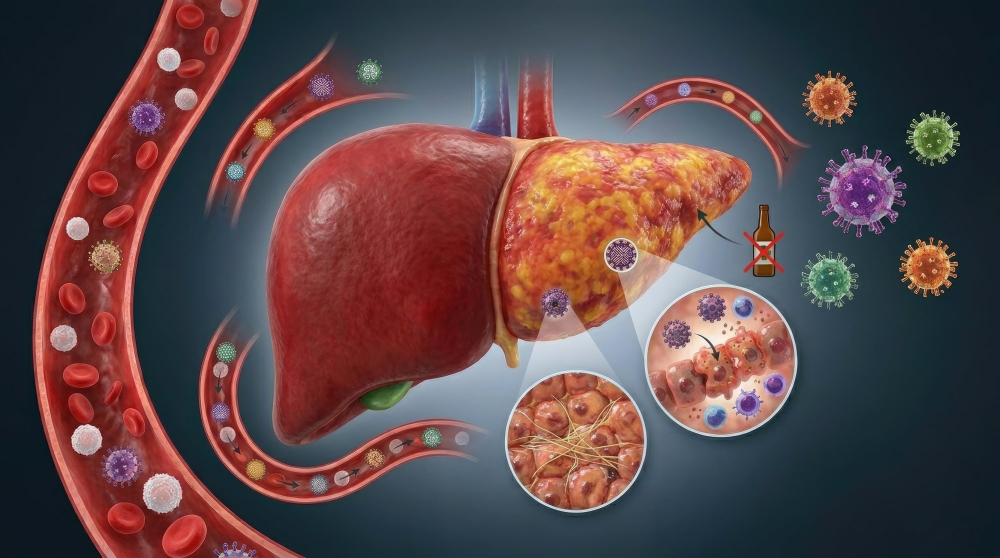
What Is Cirrhosis of Liver?
Cirrhosis of liver is a long-term condition where healthy liver tissue turns into scar tissue. As a result, the liver cannot work as well. Over time, this scarring blocks blood flow and slows down important body functions. For many people, cirrhosis develops after years of chronic liver damage. According to the World Health Organization (WHO), cirrhosis is a leading cause of illness worldwide. Because the liver helps remove toxins and digest food, damage can affect your whole body. Early signs may be mild, but the disease can get worse if not treated.
Common Causes of Cirrhosis of Liver
Many factors can lead to cirrhosis. However, some causes are more common than others. Understanding these can help you lower your risk. For example, the Centers for Disease Control and Prevention (CDC) lists these main causes:
Because many causes are preventable, making healthy choices can protect your liver.
Major Complications of Cirrhosis of Liver
Cirrhosis can lead to serious problems, known as liver disease complications. As scar tissue builds up, the liver cannot filter blood or make proteins as it should. Therefore, people with cirrhosis may face:
Because these complications can be life-threatening, early care is very important.
How Cirrhosis Is Diagnosed
Doctors use several steps to diagnose cirrhosis of liver. First, they ask about your health history and symptoms. Next, they may do a physical exam to check for swelling or tenderness. In addition, blood tests can show how well your liver works. Imaging tests, such as ultrasound or CT scans, help doctors see liver changes. Sometimes, a liver biopsy is needed. This test uses a small sample of liver tissue to check for scarring. Early diagnosis helps prevent further liver damage and improves treatment options.
Lifestyle Tips for Managing Cirrhosis
While cirrhosis cannot be cured, healthy habits can slow its progress. For example, you can:
Because each person is different, your doctor may suggest other tips based on your needs.
Preventing Cirrhosis of Liver
Prevention is key to avoiding chronic liver damage. You can lower your risk by making safe choices every day. For instance, you should:
Because liver health affects your whole body, taking these steps can help you stay well.
Conclusion
If you have questions about liver health or cirrhosis, Dr. Mohsin Khan is here to help. Schedule a consultation to get expert advice and support for your needs.